

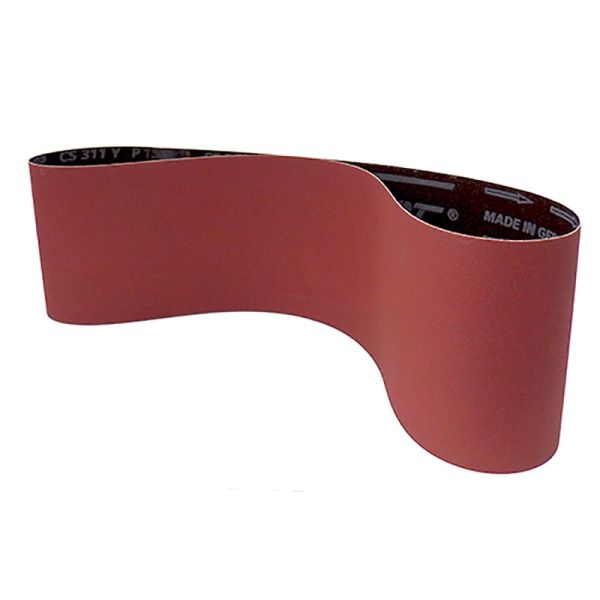


Aluminum Oxide Sanding Belts, 6 in. Wide x 48 in. Long
Aluminum Oxide, 6 in. x 48 in. Sanding Belt
These are Premium Abrasive Belts.
They are suitable for use on all ferrous metals, hardwoods, leather, aluminum, brass, bronze, stainless steel, and most alloys. You would use these belts where clogging or loading are a potential problem.
Specifications:
- Aluminum Oxide (blocky, hard grain)
- X-weight (a heavy, stiff Egyptian cotton cloth)
- Open Coat
- Resin to Resin bonded
- Anti-static to resist loading
- Sold per belt
Aluminum Oxide (AO)
Best for: General-purpose sanding with long belt life.
Aluminum Oxide (AO) is one of the most widely used abrasive grains because it delivers a strong balance of durability, performance, and value. It is manufactured from bauxite and formed into tough, pyramid-shaped grains that wear evenly over time.
As AO wears, it continues to cut—just more finely—making it ideal for multi-stage sanding. Many users extend belt life by moving a partially worn belt from a more aggressive sanding step to a finishing step.
- Top Uses: Bare wood, hardwoods, softwoods, most metals (especially steel), and general shop use
- Best For: Intermediate to finish sanding where consistent results matter
- Why Choose AO: Long-lasting, cost-effective, and versatile across multiple materials
Tip: If you want one abrasive that handles most jobs in the shop, Aluminum Oxide is the go-to choice.
Cloth Backing
Choose your backing based on flexibility and workload.
- J Weight (Light / Flexible):
Ideal for contours, curves, and detailed sanding where the belt needs to flex with the workpiece. - X Weight (Medium / All-Purpose):
The most common backing for general sanding. Works well on portable sanders and wide belt machines. - Y Weight (Heavy Duty / Polyester):
Built for flat surfaces, high pressure, and aggressive sanding. Excellent for heat resistance and durability.
Flex Options:
- J-Flex (JF): Extra flexibility for tight contours, mold sanding, and specialty applications
- X-Flex (XF): More flexibility for slack belt sanding where standard X is too stiff
Backing Selection Tips:
- Use J or JF for curves and detailed work
- Use X or XF for general-purpose sanding
- Use Y (Polyester) for heavy stock removal, flat surfaces, and high heat
Quick Tip: For most woodworking and shop applications, an Aluminum Oxide grain on an X-weight backing is a reliable, go-to combination.
| GRIT # or COARSENESS | Assorted |
|---|---|
| BRAND | Klingspor |
| MATERIAL | Aluminum Oxide |
| WIDTH | 6 in. |
| LENGTH | 48 in. |
| QUANTITY | (1) Each |
| COAT | Closed Coat |
| SKU | KB-648X |
| Prop 65 |
|
 Warning: Some dust that is created by power sanding, sawing, grinding, drilling, or other activities contains chemicals known to the State of California to cause cancer, congenital disabilities, or other reproductive issues. These chemicals include Lead from lead-based paints, crystalline silica from bricks, cement, and other masonry products, and arsenic from chemically treated lumber materials. Your risk from exposure to these chemicals varies, depending on how often you do this work. To reduce your exposure, work in a well-ventilated area and with approved safety equipment, such as dust masks and dust collection specifically designed to filter out microscopic particles. For more information go to www.P65Warnings.ca.gov/wood.
Login and Registration Form