

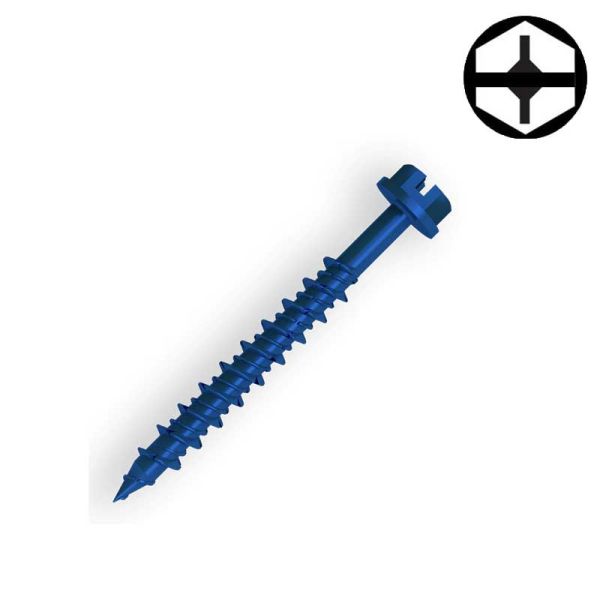


3/16 x 1-1/4 Titen Flat Head Concrete, Zinc/Ceramic, Hex/Slot, Qty: 25
3/16 x 1-1/4 in. Titen Flat Head Concrete, Zinc/Ceramic, Star - Qty: 25
Heat-Treated Carbon Steel with Blue R-Blocker Coating
These Extra-Hard Threads Cut Their Own Threads into Concrete!
The highest-strength concrete screw has v-notched, high-low threads for anchoring into concrete, masonry, and brick. The advanced R-Blockercoating offers exceptional test results in salt spray testing. These concrete screws install quickly in a pre-drilled hole and can be removed and reinstalled.
These screws are perfect for attaching framing lumber, electrical boxes, brackets, or almost anything else to concrete.
Using masonry anchors can be a hassle. First you drill a clearance hole in the lumber. Then you drill a hole in the concrete hoping everything remains properly aligned. Finally, you insert anchoring sleves into the masonry holes and pray that your precision allows all the screws to fit. There is a better way!
These concrete screws don't use any type of anchor sleeve at all. In fact, all you do is drill a hole into the concrete through the part you are anchoring and drive the screw. Because of the special thread pattern and hardened steel, the screws cuts their own threads into the concrete.
These screws are coated with an epoxy coating, so they passed a 25 cycle Kesternich corrosion test.
This item requires a 5/32 in. diameter pilot hole. And can be driven with a #2-sized square-drive or Phillips driver bit.
- Hex Washer, Slotted, and Phillips Recess
- Drill bit included
| SIZE (#8, #10 ...) | 3/16 in. |
|---|---|
| LENGTH | 1-1/4 in. |
| MATERIAL | Corrosion Resistant Coated |
| COUNTERSINK NIBS | Without Nibs |
| RECESS TYPE | Hex / Slotted |
| HEAD | Hex Washer |
| POINT TYPE | Concrete |
| BRAND | Simpson Strong-Tie |
| RECESS SIZE | Hex Socket |
| QUANTITY | SML (1-50) |
| Color | Blue |
| RoHS Compliant? | No |
| SKU | RFX-0312-D |
| Prop 65 |
|
 WARNING: While working in a hazardous areas where you can be exposed to flying objects, fragments, and particles, primary protective devices such as safety glasses or goggles with side shields must be worn. Secondary protective devices such as a face shield is required in conjunction with primary protective devices during severe exposure to impact hazards.
WARNING: Drilling, sawing, sanding or machining wood products can expose you to wood dust, a substance known to the State of California to cause cancer. Avoid inhaling wood dust or use a dust mask or other safeguards for personal protection. For more information go to www.P65Warnings.ca.gov/wood.
Login and Registration Form