

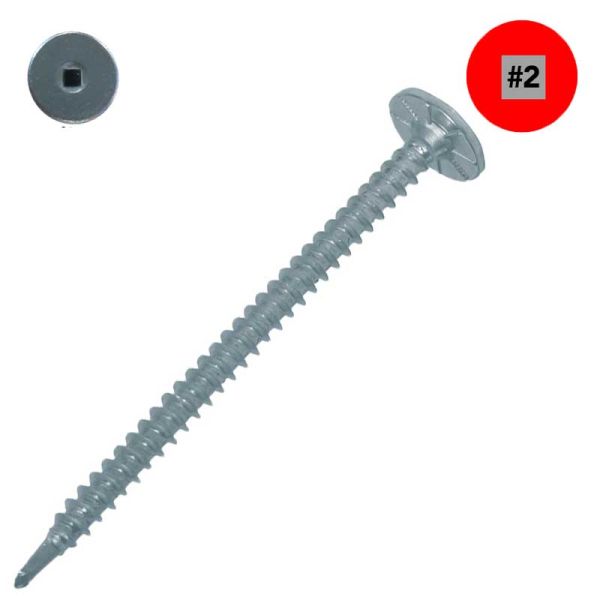


10 x 3 in. Powerhead Cabinet-Mounting, for Metal Studs, Square, Nibs - Qty: 150
10 x 3 in. Powerhead Cabinet-Mounting, for Metal Studs, Square, Nibs - Qty: 150The PowerHead Screws for Metal have more holding power, finer threads, and a drill-point head to easily tap into steel studs for maximum holding power.
The PowerHead Screws for Metal have more holding power, finer threads, and a drill-point head to easily tap into steel studs for maximum holding power.
The PowerHead Screws main advantage is its large, oversized flat head that won't pull through your attaching material. The oversized head has 4x the holding power than a conventional screw head. Nibs under the head will clear away material to allow the top of the head to sit flush with the surface.
PowerHead Screws will fasten to MDF boards and there is no need to pre-drill. However, it is recommended to test drilling a screw into a sample piece of MDF before beginning the final project. Depending on the manufacturer of the MDF board, varying amounts of glue are used in different boards. If a large amount of glue is used in the board, there is a greater chance that the board will crack and/or develop a bump when the screw is drilled into the board. If the tested area does crack or bump, it is recommended, in this case, to pre-drill.
The silver appearance of Clear Zinc has been around for many years and remains very popular. It also provides a moderate level of rust protection. Since this is a true electroplating, the zinc coating is part of the surface of the steel and very durable.
Self Tapping Screws feature a self-drilling tip that drills through the steel and then the tapping screw thread locks itself into the steel. Make sure you use a slower rpm. and give the self-drilling point time to cut away the steel just like a drill bit
FEATURES:
- Large Oversized 9/16" diameter heads provide 4 times the holding power of other screws.
- Type 17 point allows for self-drilling
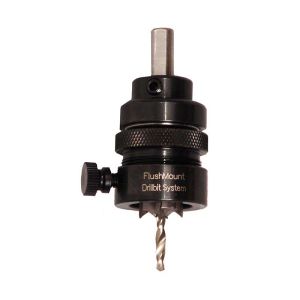
- When used with FastCap's FlushMount Drill Bit (part # FCS-6050), the screw head can be hidden perfectly behind a peel-and-stick FastCap.
For seating the screwhead flush, use of the Flush Mount Drill is recommended. When counterboring with the flush mount drill, ample material thickness must remain for overall strength.
| SIZE (#8, #10 ...) | #10 |
|---|---|
| LENGTH | 3 in. |
| MATERIAL | Zinc, Clear |
| COUNTERSINK NIBS | With Nibs |
| RECESS TYPE | Square |
| HEAD | PowerHead |
| POINT TYPE | Self Tapping Metal |
| BRAND | FastCap |
| RECESS SIZE | #2 |
| QUANTITY | MED (51-150) |
| RoHS Compliant? | No |
| SKU | 0830-PHM-CL |
| Prop 65 | 0 |
Login and Registration Form