

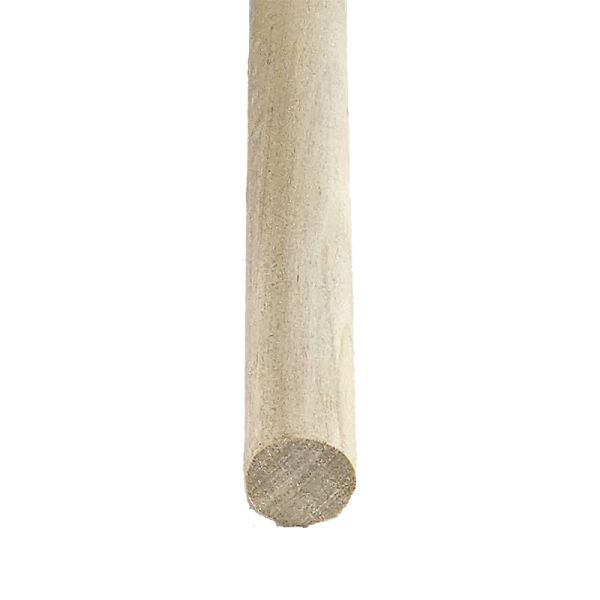


1-1/4 in. dia. x 36 in. long Hardwood Dowels, Ash - QTY:9
Dowels are Made to Order
These Special order items are non-cancelable and non-returnable
When available, these take 3-4 weeks for delivery
Pricing can change with each order. Please call for current pricing
McFeely’s® Hardwood Dowels
McFeely’s dowels come from the Appalachian area. They are air-dried for months, then kiln-dried.
Safe Storage Requirements:
- Dowels should be stored in a stable, humidity-controlled environment. Dowels stored in unstable environments can become misshapen.
- Hardwoods such as beech and poplar are popular choices because they are reliably strong. Hickory is one of the stronger and more expensive dowel options.
- Preparing a dowel for finish usually requires only light sanding.
- Dowels can be stained with the grain using a rag. Be sure to wipe away any excess stain.
- Dowels can be painted using several thin coats instead of one thick coat. Rotate the dowel a quarter turn every few minutes as it dries to help prevent runs.
- Long and short dowels are usually glued in place. The dowel should fit hand-tight without needing a hammer and should be removable by hand before glue is applied. Fluted dowels, commonly used in smaller joinery applications, help release trapped air and allow glue to cover the dowel. Long dowels are used for many different projects and typically do not have these features.
- To help prevent shipping damage, package sizes cannot be changed.
McFeely’s will accept returns for any product that proves to be defective. Please contact Customer Service to resolve any issues before returning dowels.
Shipping:
- Ship-to address cannot be a PO Box.
- Ship-to address must be within the continental United States.
- Normal freight minimums must be met.
- Items requiring LTL shipping will have delivery charges and should be quoted before ordering.
Order Placement:
- Orders can be placed online or through a Customer Service Representative. Customer Service can be reached at 800-443-7937.
Delivery:
- Please allow 4–10 days for shipment.
| BRAND | McFeely's |
|---|---|
| Wood Type | Ash |
| Diameter | 1-1/4 in. |
| LENGTH | 36 in. |
| QUANTITY | 9-Pack |
| SKU | ADO-1250-AS36 |
| Prop 65 |
|
 Warning: Drilling sawing sanding or machining wood products can expose you to wood dust a substance known to the State of California to cause cancer. Avoid inhaling wood dust or use a dust mask or other safeguards for personal protection. For more information go to www.P65Warnings.ca.gov/wood.
Login and Registration Form